Lunar Science5 min read
How the Moon Shapes Life on Earth
There is a quiet companion to our world, a pale and patient presence that has circled Earth for more than four billion years.
By Brage W. Johansen
There is a quiet companion to our world, a pale and patient presence that has circled Earth for more than four billion years.
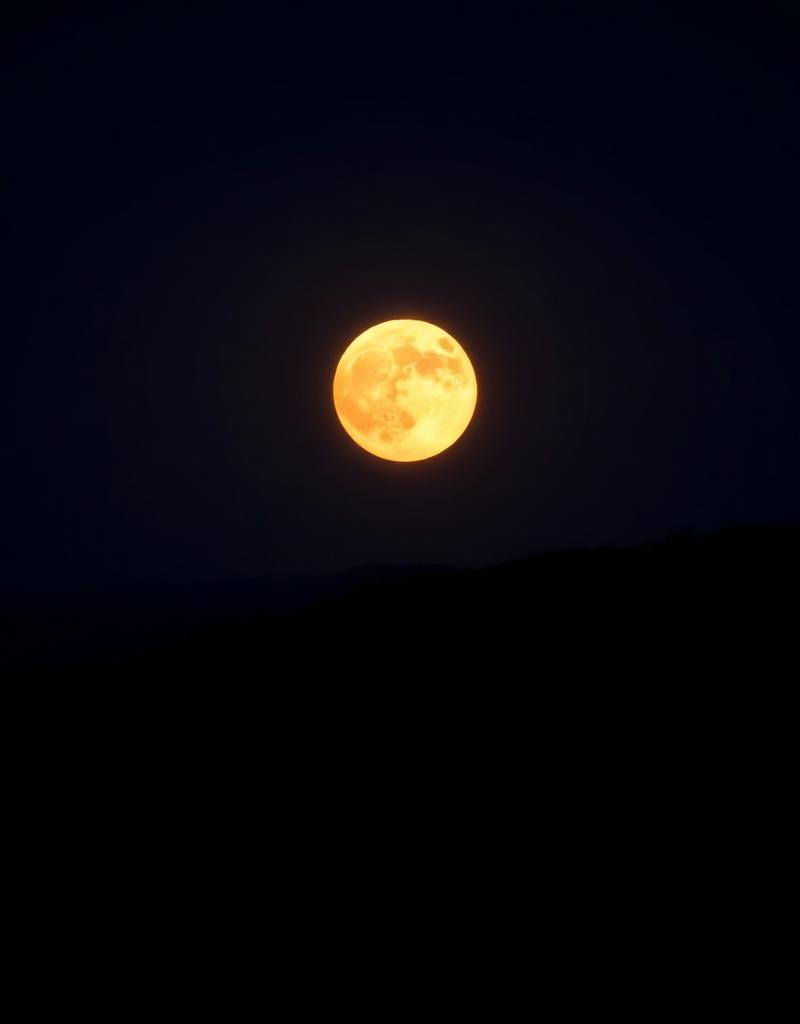
There is a quiet companion to our world, a pale and patient presence that has circled Earth for more than four billion years. We call this big rock the Moon. It has shaped the dynamics of oceans, the rhythms of living things, and even the inner cadence of human life.
In the very shaping of Earth as a goldilocks entity that could generate and sustain life, the Moon was a vital component and already at work. Its gravity reached across space and touched our planet, pulling gently but persistently. That pull gave rise to tides — vast, breathing motions of the oceans. The sea would rise and fall, again and again, sculpting coastlines, mixing nutrients, and creating the tidal pools where some of life's earliest experiments may have unfolded, in parallel with fertile black smokers in the ocean depths.
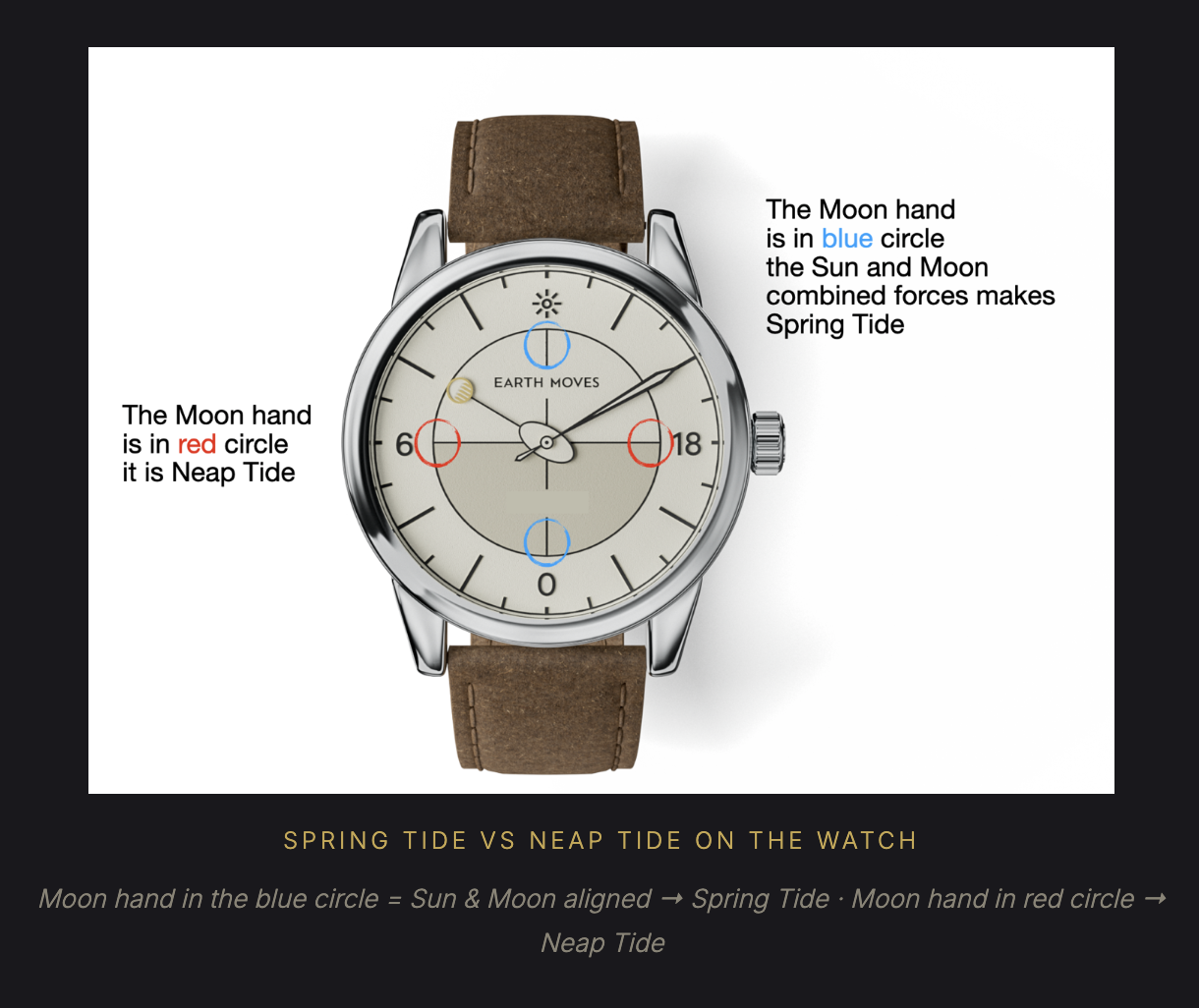
In those tidal margins, molecules had time to assemble, disassemble, and assemble again. Complexity was given a chance. Without the Moon's steady influence, the story of life on Earth might have been written very differently — or not at all. Together with the gravity of the Sun our tides are varied but stable, creating enough variation and movement for life to creatively develop, and we know that movement provokes life. The three-body dynamics of Sun–Earth–Moon helped draft the opening chapters of biology.
As life grew more intricate, it did not escape the Moon's influence; it adapted to it. Entire ecosystems became synchronized with lunar cycles. Coral reefs, for example, perform one of nature's most extraordinary events: mass spawning. Across vast stretches of ocean, countless corals release their seeds into the water at almost the same moment, often timed to a particular position of the Moon. Thousands of turtles enter certain beaches to lay their eggs just when the Moon is in its quarter, at specific days during a year. It is a choreography of staggering precision, guided by an ancient celestial rhythm.
Along the coasts, fish move with the tides, their feeding and breeding patterns shaped by the rise and fall of water levels. In mangrove forests and salt marshes, the flooding and draining of habitats by tidal action determines what can live there and how organisms must adapt. Even in the deep ocean, far from sunlight, currents stirred by tidal forces carry nutrients and regulate the chemistry of the sea.
Wildlife, too, is synced with the Moon. In the brightness of a full Moon, nocturnal animals alter their behavior. Some hide more carefully from predators. Others take advantage of the extra light to hunt or forage. The cycles of predator and prey are, in part, a lunar story.
And what of us, the human observers? For most of our history, we lived under dark skies where the Moon was not a distant ornament but a practical guide. Farmers planted and harvested by its phases. Fishermen read its position to predict the tides. Sailors steered by its light. Physicians once believed it governed the flow of bodily fluids — and while modern medicine has refined that view, the Moon's influence on sleep patterns and circadian rhythms remains an active area of scientific enquiry.
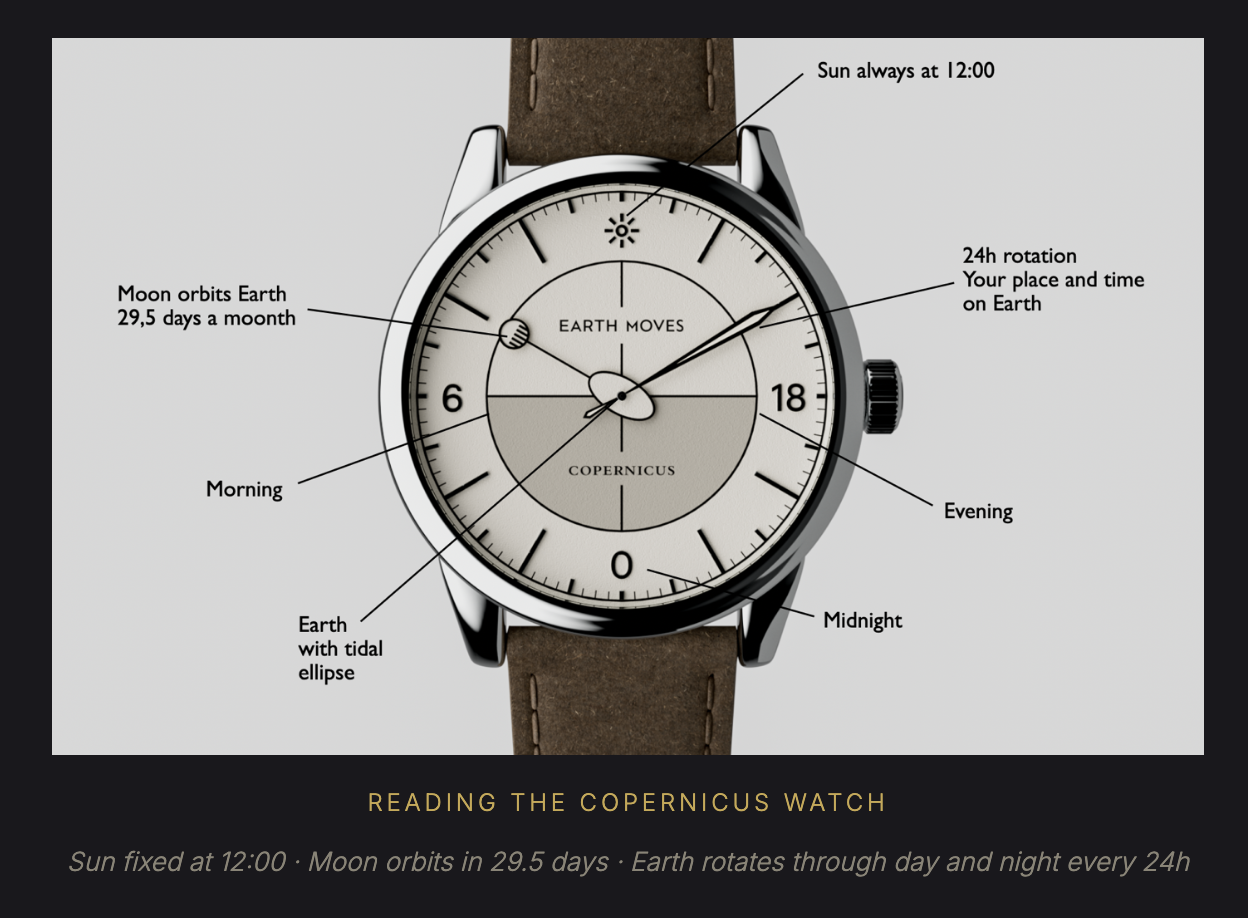
To observe these phenomena is to reconnect with a deeper layer of reality — one that operates on timescales both ancient and ongoing. The Earth Moves watch is conceived in exactly this spirit. It follows Earth's own rotation over 24 hours, its hand sweeping through day and night. It tracks the Moon's position in its orbit — not as decoration, but as living information. For those who live by tides, moonlight, and natural cycles — fishermen planning their next outing, trekkers reading the changing light, anyone who simply wishes to feel less estranged from the sky — the watch offers a window into the mechanics of the world.
The Moon hangs in the sky as it always has — silent, steady, and luminous. It asks nothing of us. But if we choose to pay attention, it offers something rare in the modern world: a sense of belonging to something larger and older than ourselves.