Oceanography4 min read
The Moon Is the Master of Oceans: Tides Explained
The Moon creates two tidal bulges on opposite sides of Earth — one pulled by gravity, one pushed by orbital inertia.
By Brage W. Johansen
The Moon creates two tidal bulges on opposite sides of Earth — one pulled by gravity, one pushed by orbital inertia.
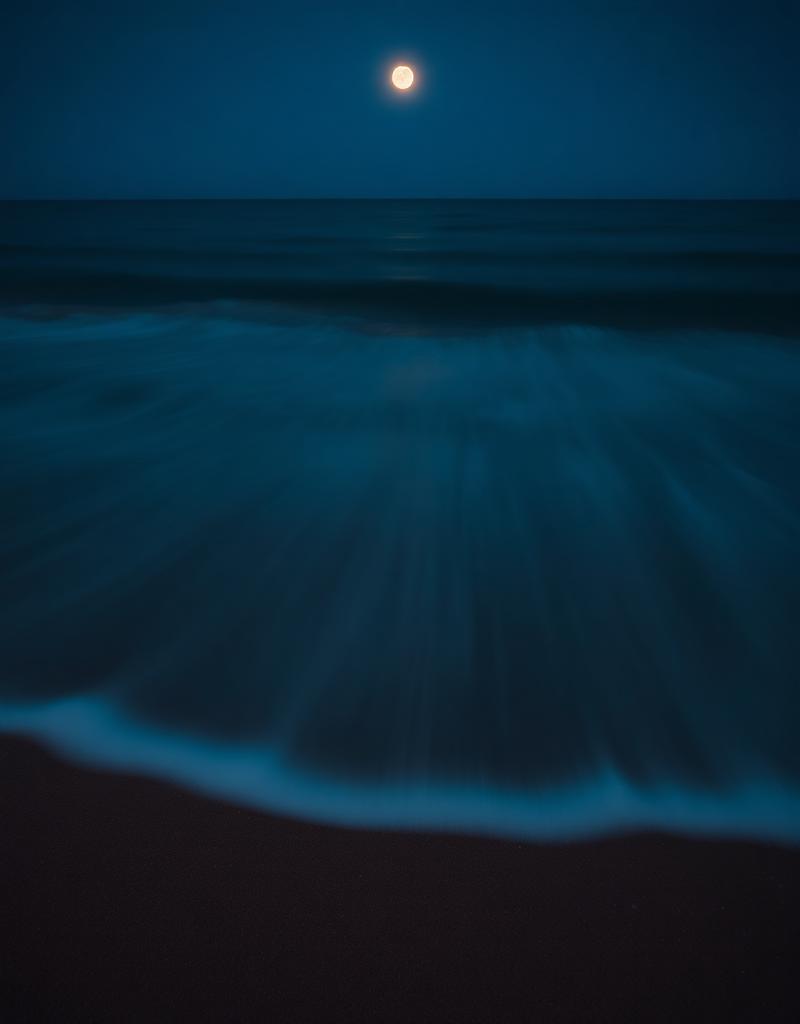
The Moon creates two tidal bulges on opposite sides of Earth. One bulge faces the Moon — which is the direct gravitational pull — and one faces away, caused by inertial effects from the Earth–Moon orbital motion. As Earth rotates through these bulges every 24 hours and 50 minutes, coastal locations experience two high tides and two low tides. Why the extra 50 minutes? It's because the Moon moves in its orbit during an Earth day, pulling the high tide with it.
Even though the Sun is 27 million times more massive than the Moon, it's also 390 times farther away from Earth. Because tidal force decreases with the cube of distance, the Sun's tide-generating force ends up being about half that of the Moon.
The Sun creates its own two-bulge system in Earth's oceans, just like the Moon does. If there were no Moon, we'd still have solar tides — but they'd be smaller, and life on Earth might look very different.
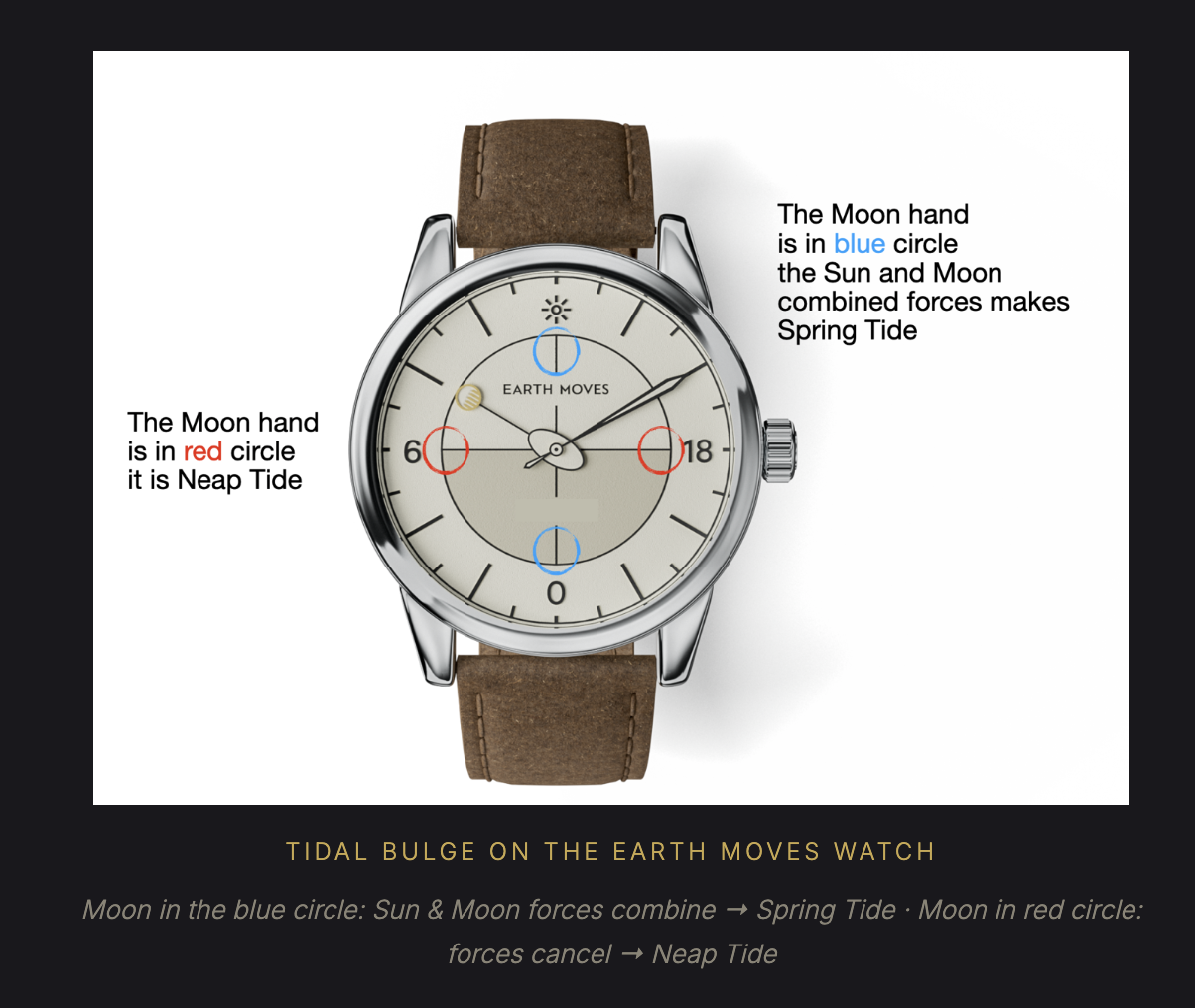
The real magic happens when the Sun and Moon work together or against each other. Spring Tides occur during new and full moons, when the Sun, Earth, and Moon align. Their gravitational forces combine, creating especially high high-tides and especially low low-tides. Neap Tides happen during first and third quarter moons, when the Sun and Moon are at 90-degree angles to each other. Their forces partially cancel out, creating more moderate tides. This solar–lunar interaction creates a roughly two-week cycle between extreme and moderate tides.
There are in addition huge local differences caused by topography and oceanic currents. The Bay of Fundy in Canada experiences tides of up to 16 meters. And if you want to see the world's most powerful maelstrom, you must visit the Saltstraumen in Northern Norway — where the tide creates the most powerful tidal current on Earth.
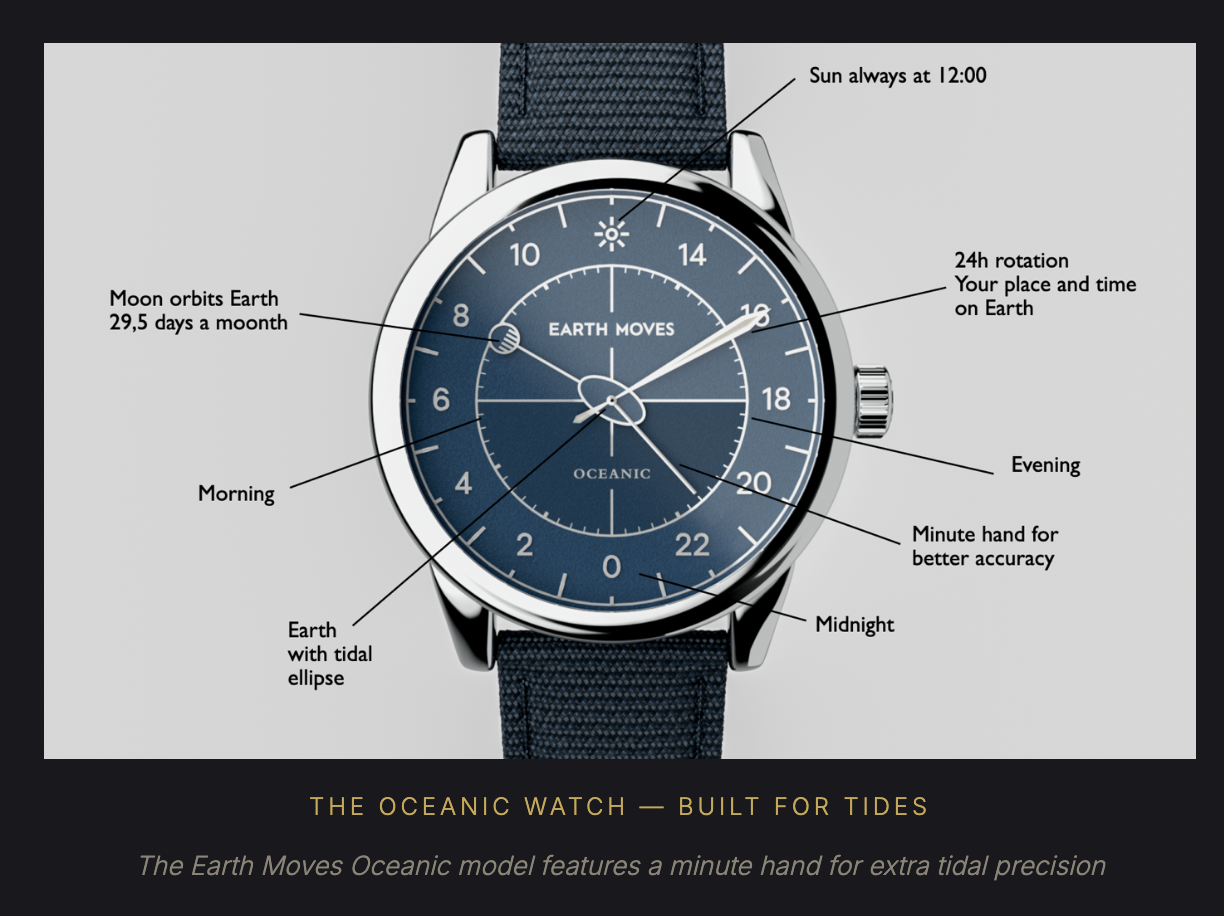
The watches of Earth Moves have the Tidal Bulge and Moon orbit as a main feature. You can easily see when you are rotating towards the Moon (high tide) or away from it. When the Moon is at midnight (00:00) or midday (12:00) on the watch face, it is spring tide. When the Moon is at 06 o'clock or 18 o'clock, it is neap tide.